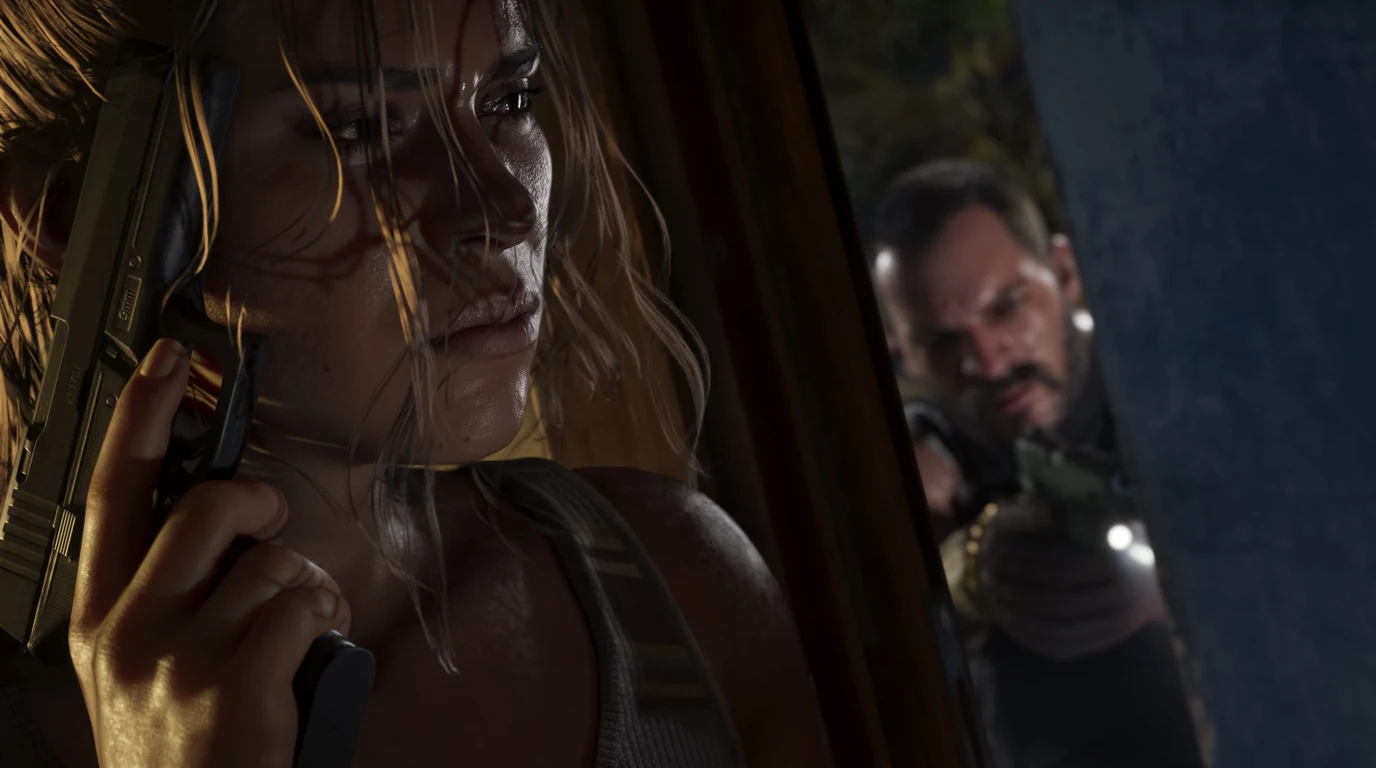
GTA has had two protagonists before. Two whose relationship shifts with your decisions is new.
What is known about the pair
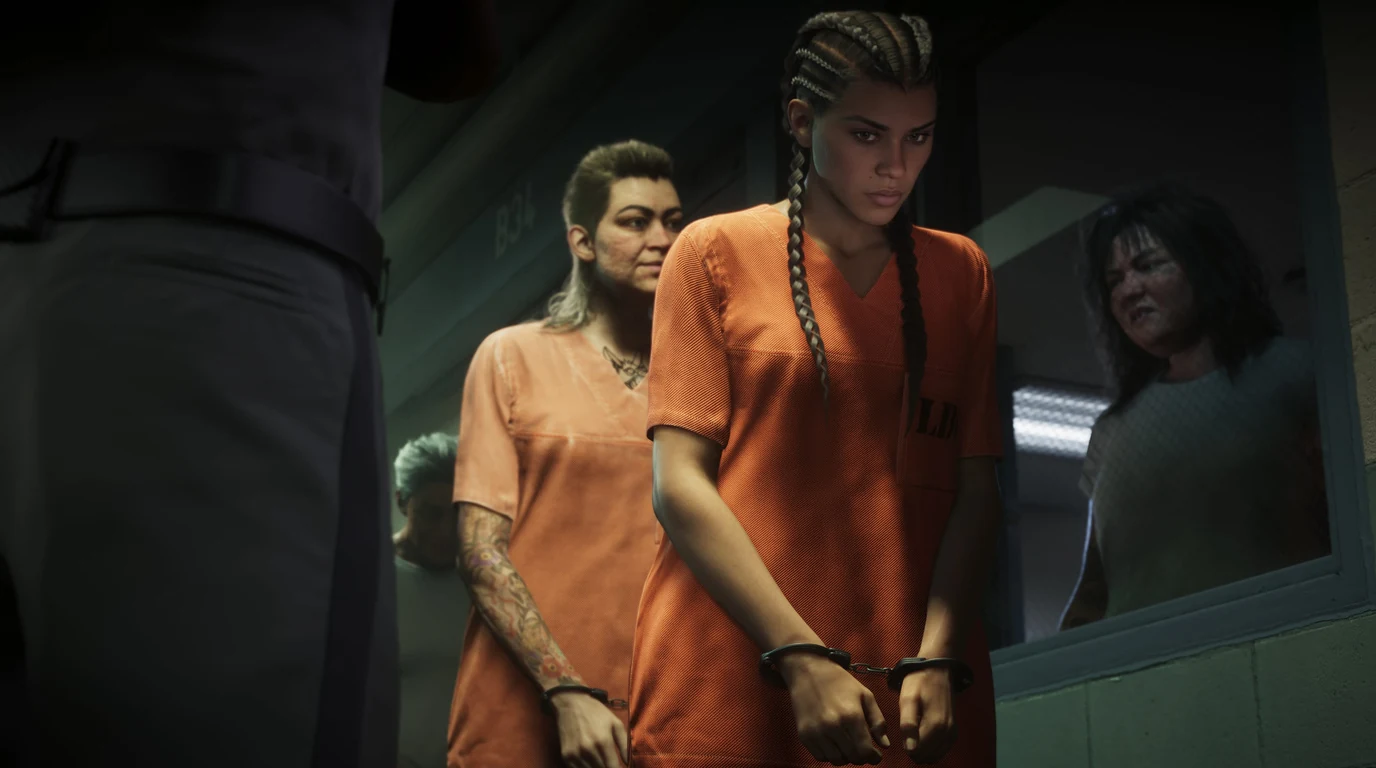
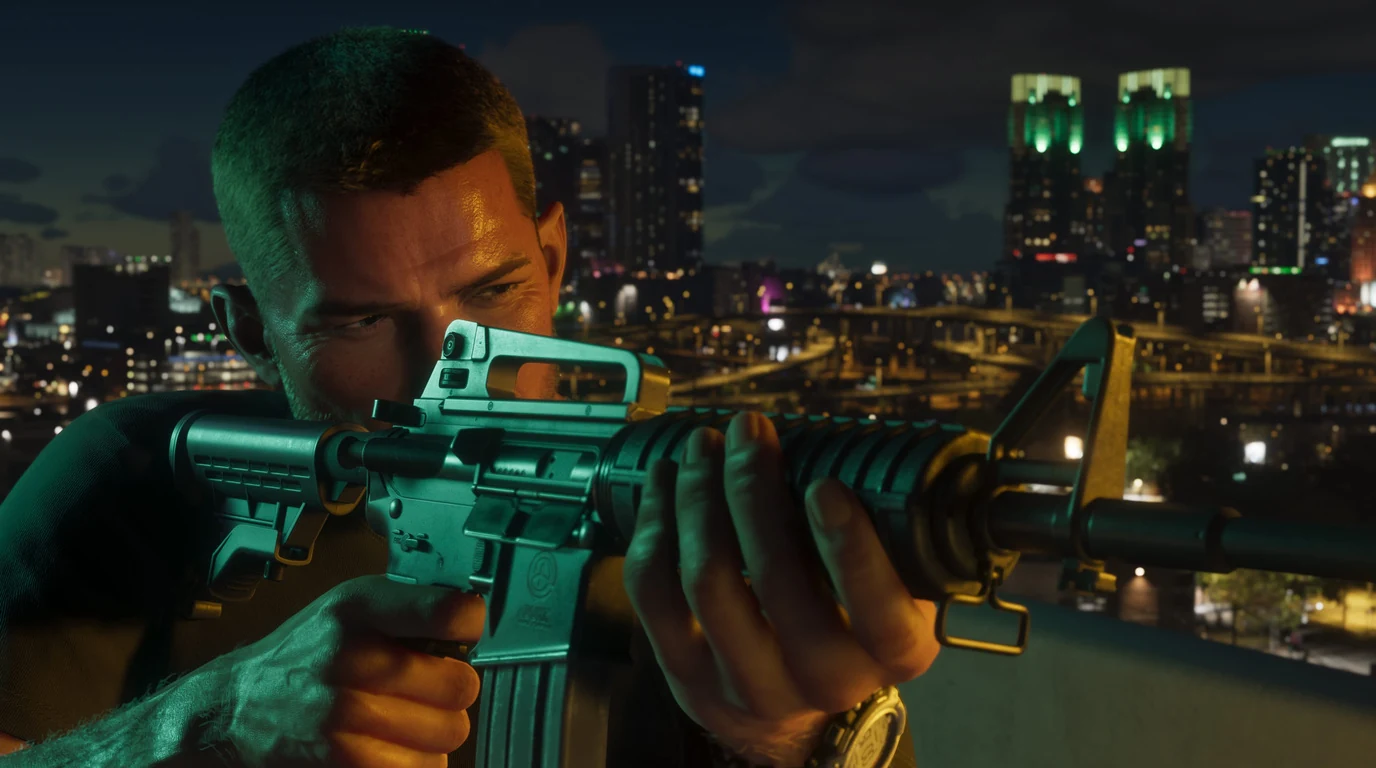
Jason Duval is ex-military. Lucia Caminos is the first female protagonist in the main line of the series. Since the first trailer, Rockstar has described them as a couple in the mould of Bonnie and Clyde, and that is the only official framing of their dynamic we have.
Mechanically, little is confirmed: you can play as both, switch between them, and in some sequences act as a pair at once. That alone separates the design from GTA V, where three men lived largely separate lives and met mostly on jobs.
Everything else comes from leaks and analysis. And there the most interesting detail sits.
Honor turned into a relationship
By the descriptions, the honor meter from Red Dead Redemption 2 has been reworked here: instead of scoring whether you are good or bad, the game tracks the state of the relationship inside the pair. The counter is cumulative — it responds not to one choice but to how you behave across the whole game.
The logic is the same as honor. Small things accumulate. Whether you answer Lucia or stay silent, cover her in a shootout or drive off, take an extra risk for money or decline.
RDR2 measured what kind of man Arthur was. This measures what kind of pair the two of them became.
For GTA that is a fundamentally better anchor. Morality inside satire always rings false: a game about criminals that disapproves of crime argues with itself. A relationship carries no such contradiction. You can be a monster to an entire state and still be reliable to one person. Or the reverse.

A partner with a mood
If a relationship counter exists, it needs a visible consequence — otherwise it means nothing. The obvious one is a partner with a state.
How that might read in play, without a single line of interface:
- Silence in the car. After a fight the radio plays and nobody speaks. A few drives later, they do again.
- Quality of cover. Lucia on an upswing works aggressively and pushes forward; when things are bad she hangs back and does exactly what was asked.
- Lines on the move. Comments about your decisions rather than generic barks from a pool.
- Initiative. On good terms she suggests jobs herself. On bad terms she waits to be told.
This is precisely what Rockstar is good at. In RDR2 the state of the gang was legible from the camp: who sat with whom, who had left, what was playing by the fire. No indicators at all, and yet perfectly clear.
The quiet scenes
From which follows something GTA has never had: scenes where nothing happens.
The campfire in RDR2, a drive with a conversation, a meal, an evening in front of a television — beats with no objective and no counter. Their value is that they let characters become people before everything goes wrong. Without those scenes the ending of RDR2 would not land at all.
In a modern setting it is easy: a coastal road, a diner at night, an apartment with the TV on. No new technology is required — only the willingness to spend the time of the player on something that does not advance the plot.
An ending counted across the whole game
The boldest consequence of a cumulative meter is an ending that depends not on a choice in the last mission but on the sum of sixty hours of behaviour.
That is exactly how RDR2 worked: the game never asked who you wanted to be, because it already knew. Which gave the ending a weight a final fork never has.
Carry the model across and several outcomes appear. The pair leaves together. One of them stays. One gives up the other. Nobody goes anywhere. The difference is that the player does not pick between endings — they arrive at one.
Both checkpoints apply: the extended gameplay showcase on 27 August 2026 and the release on 19 November. Rockstar says nothing about story until the last moment, so the second date is probably the one that matters here.