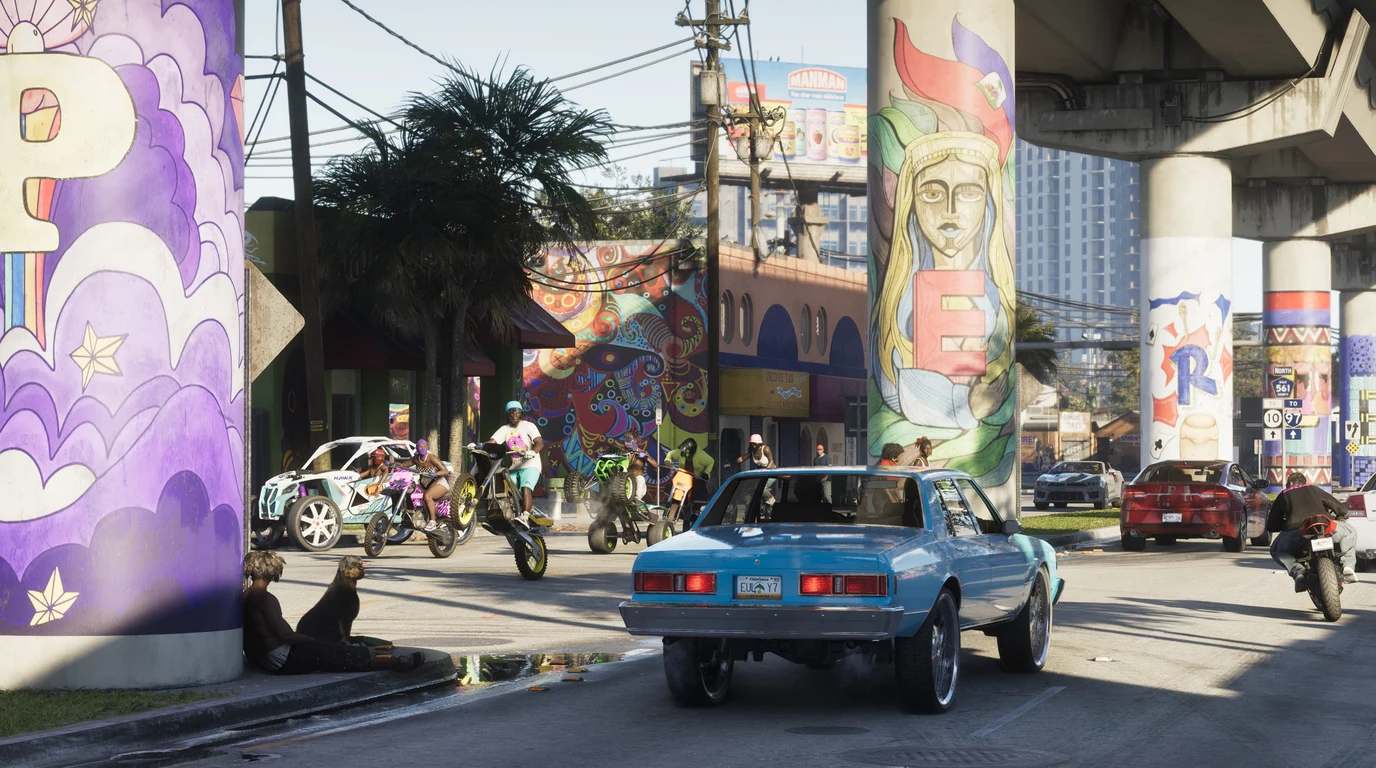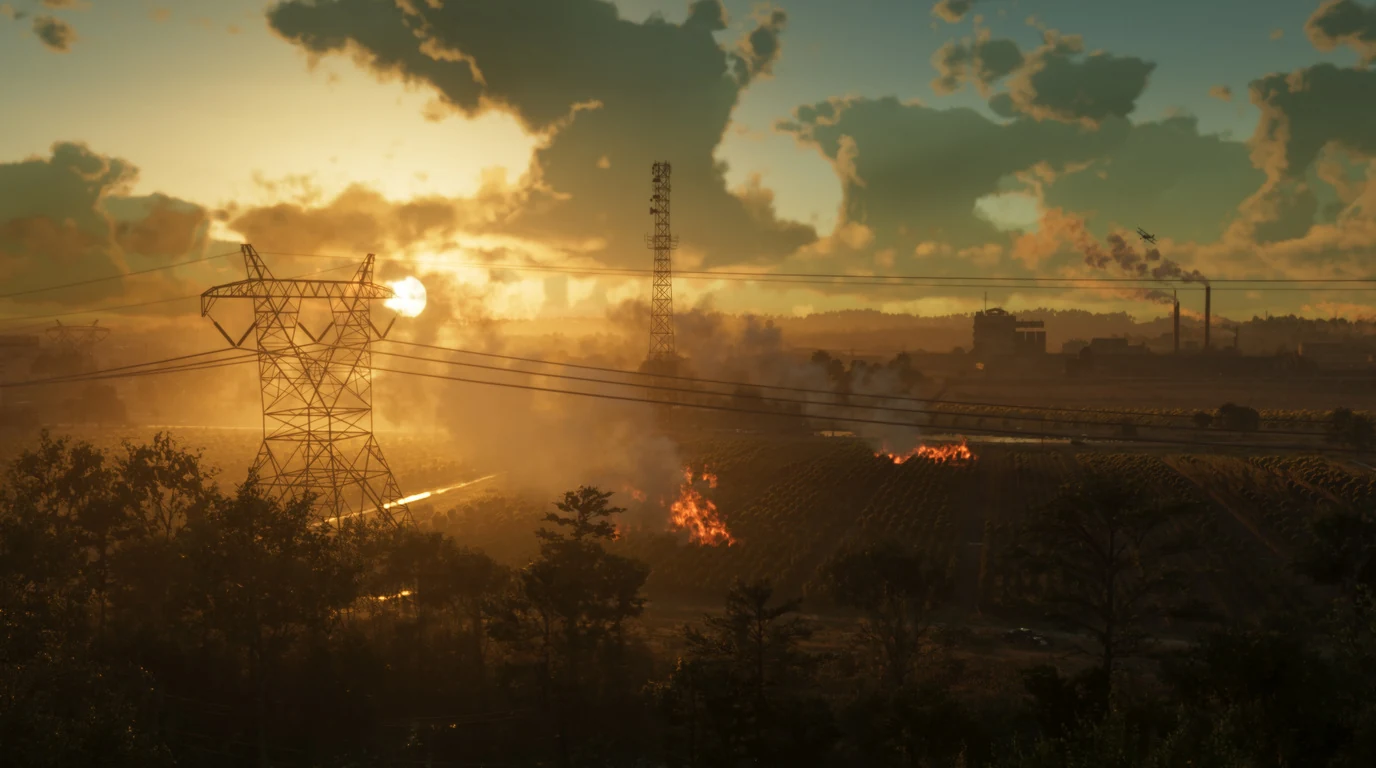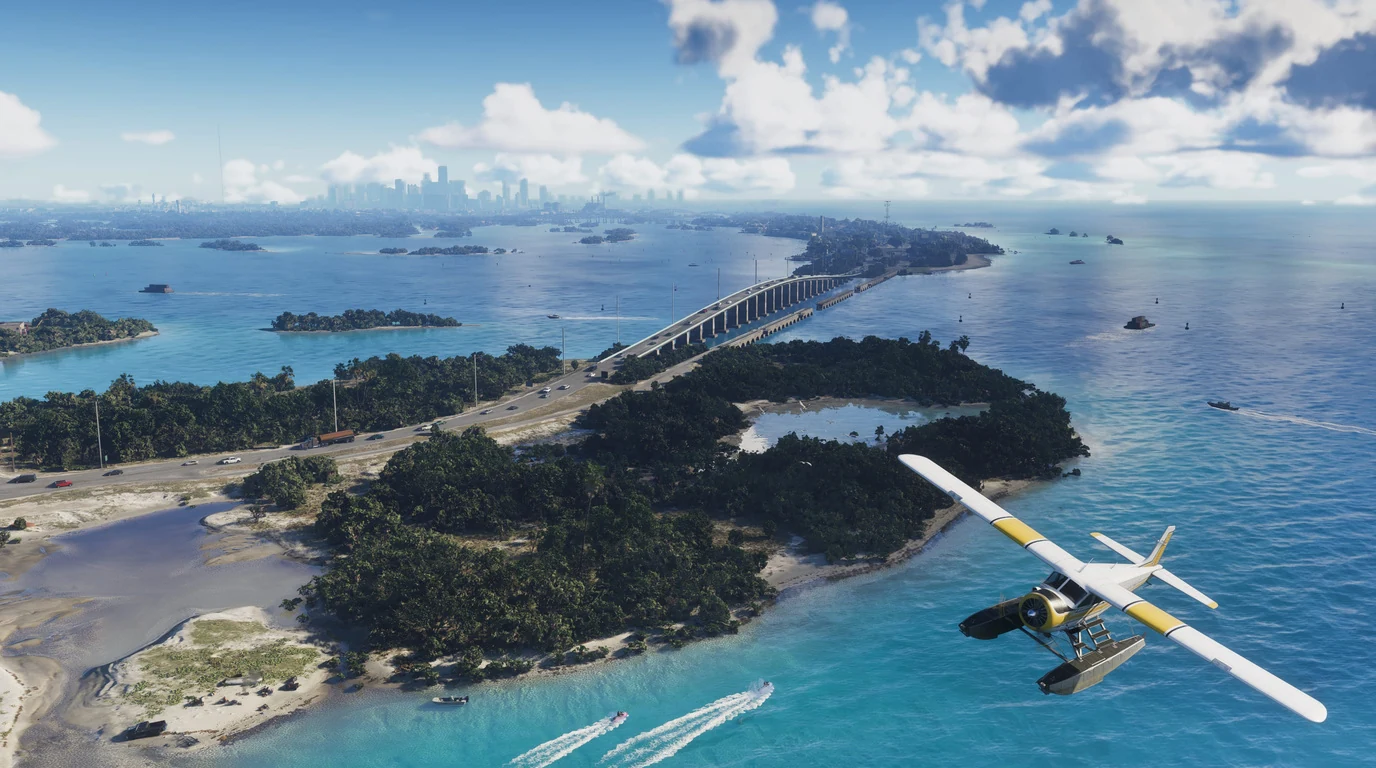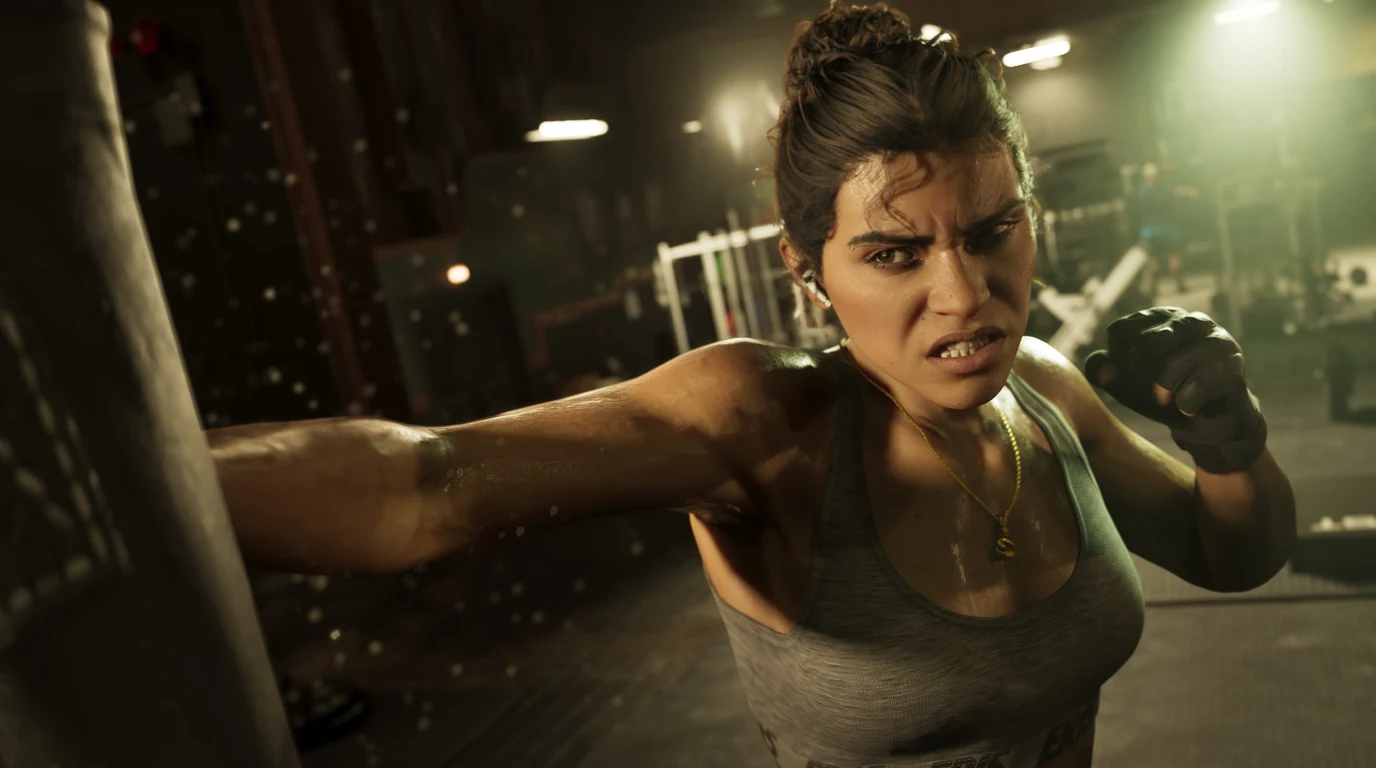
For the first time since San Andreas the series is tracking what shape the protagonist is in. The question is where Rockstar stops.
What the leaks found
Three connected things came out of the August clips.
First, a contextual stamina meter: it appears in melee and, by the footage, drains on strikes and sprints. Second, a stat people are calling focus, which rises through activities — in the clip, basketball. Third, healing items used mid-fight, something branded Zombix.
The gym also shows up as a way to build strength. So the game does not merely have stats: it has ordinary, everyday ways to raise them.
All of this is an early build, and any HUD meter can vanish before release. But the set is too coherent to be accidental.
The San Andreas inheritance
Progression through everyday life points straight back at San Andreas, the one entry where the protagonist could gain weight, build muscle, forget how to swim and earn a reputation on his own block.
The system was crude then: bars grew through repetition and food worked as a calorie counter. But it gave the series something it has not had since — the sense that the character belongs to a place and lives there rather than merely running errands in it.
In GTA V the protagonist was a tool. In San Andreas he was a body. The series appears to be returning to the second.
The modern version of the same idea looks gentler: not bars to grind but activities worth doing that happen to give something back. Basketball in the leaks is exactly that case.
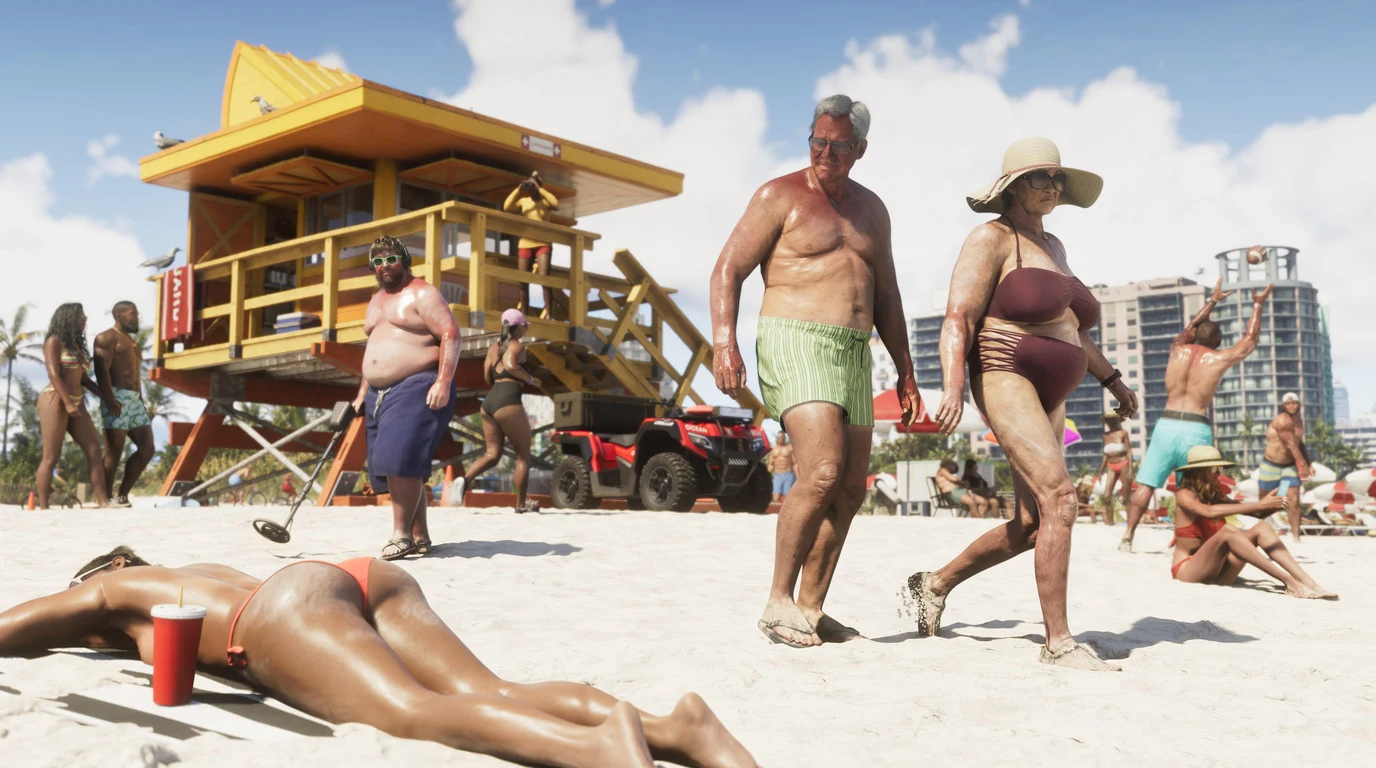
Where the line runs
The real question is how deep the simulation goes. Red Dead Redemption 2 tracked weight, temperature, the cleanliness of clothes and the state of a beard, and players split over whether that was texture or busywork.
A realistic compromise for GTA looks like this: the system exists, but it does not punish. A set of states that colour the experience rather than block the game:
- Fatigue. After a sleepless night, worse stamina and more sway on the aim. An hour of sleep fixes it.
- Hunger. Not death by starvation but a mild penalty cleared at any diner.
- Hangover. A distinct state after a heavy night, with a degraded image and unsteady hands.
- Condition. Regular exercise means more endurance; none at all means less.
The key word is mild. GTA stops being itself the moment the player has to plan lunch. The job of the system is to give the body weight, not to turn the game into a needs manager.
Injuries with consequences
The most interesting and riskiest idea in this area is wounds that do not vanish in ten seconds.
Health currently regenerates on its own, and a shootout leaves no trace. The alternative: a hit to the leg produces a limp, a hit to the arm spreads your aim, and neither is fixed by crouching behind cover — it takes a doctor, a kit or time.
RDR2 already did something adjacent through its health-core and tonic system, and there it produced the right effect: a fight cost something after it ended. For GTA it would mean that a big job needs recovery as well as an escape route, and a private clinic in Vice City becomes a point on the map rather than set dressing.
There is no confirmation of this. There is only an indirect sign: a game already counting stamina and healing with items is already thinking about the body.
Why this serves the story
There is a less obvious side effect. Everything tied to the body works on character.
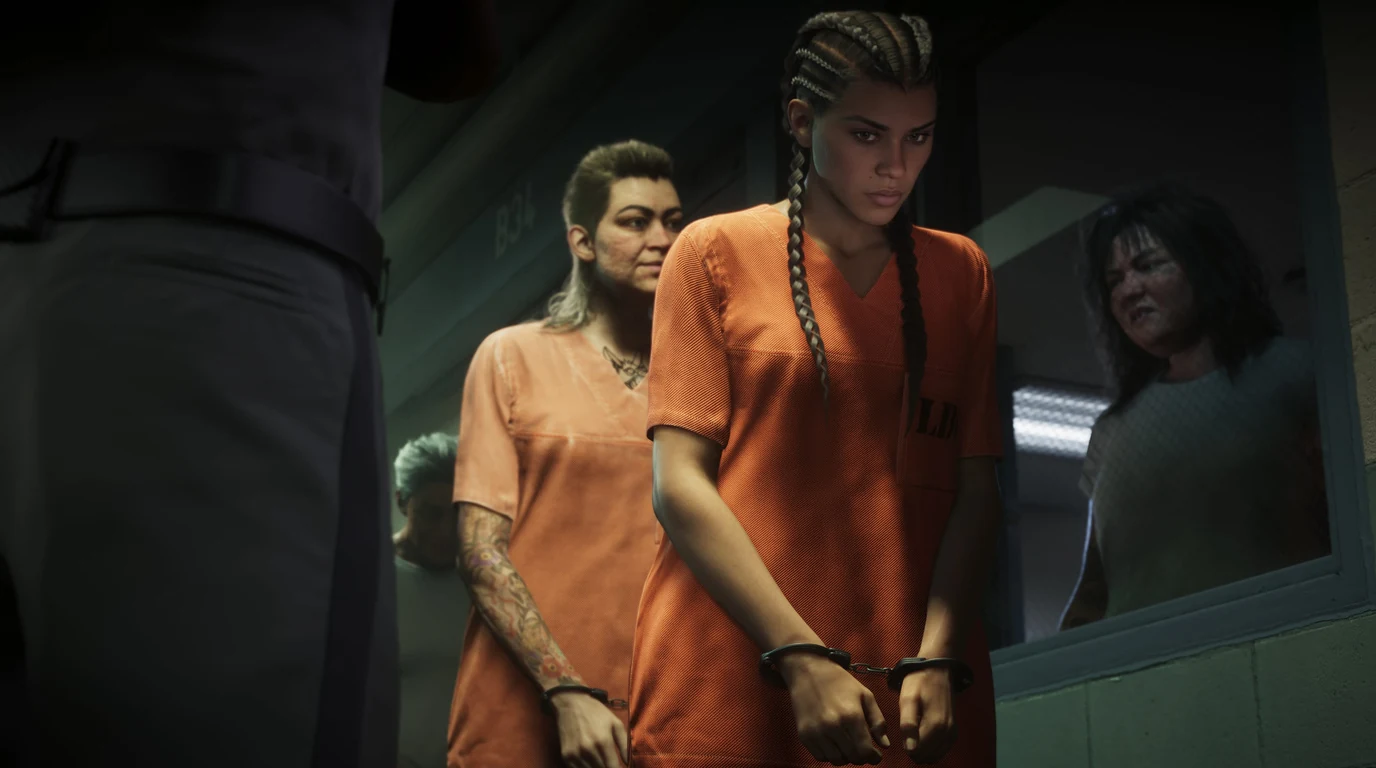
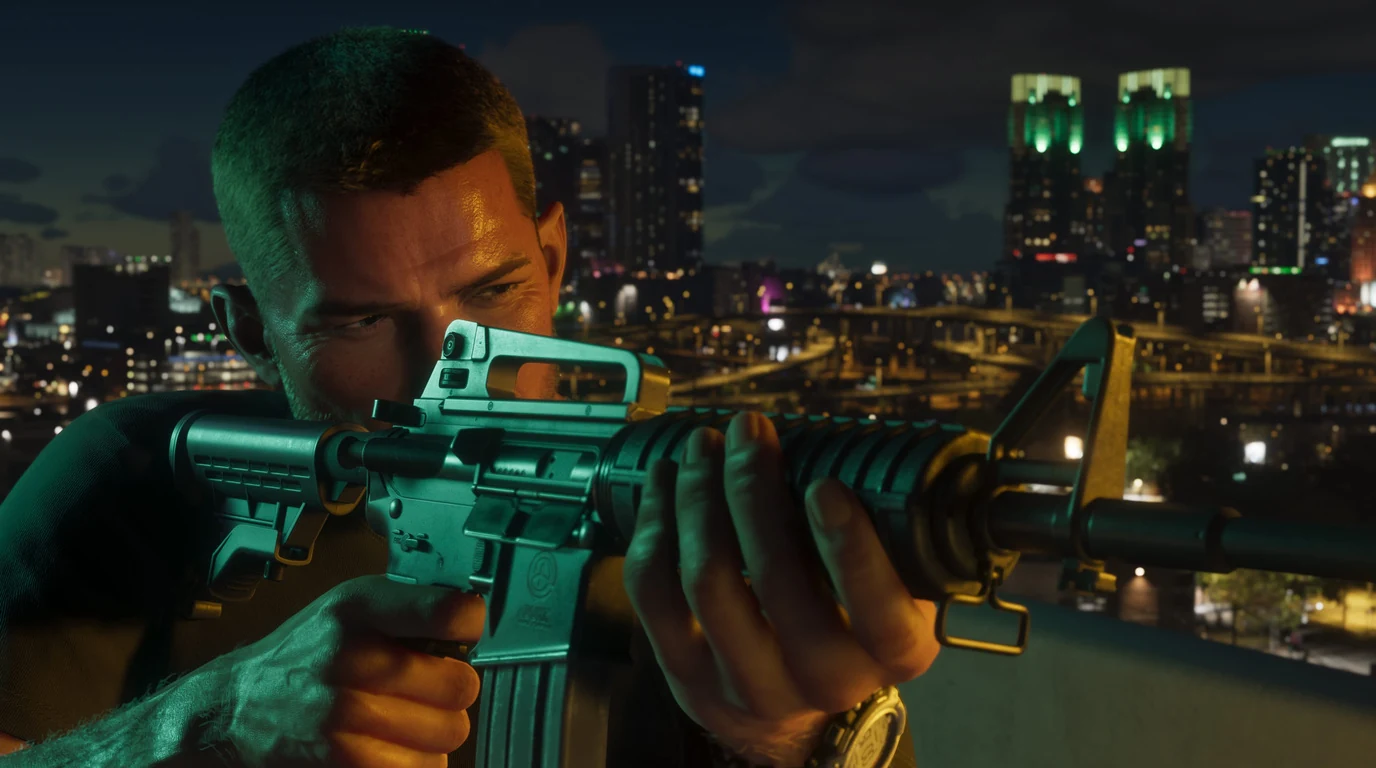
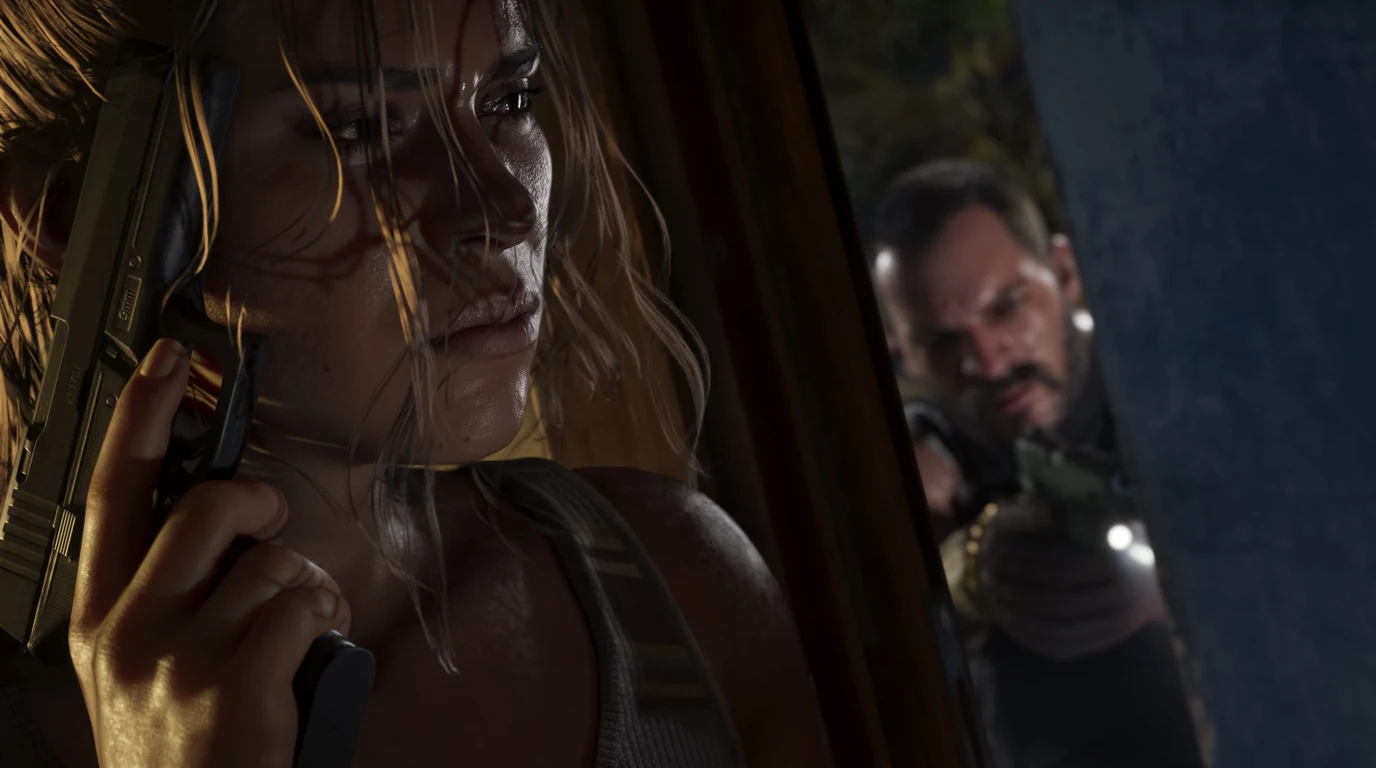
Jason is ex-military, and the difference between him in shape and him on a third sleepless night is characterisation, not statistics. The same goes for Lucia. When a game conveys condition through gait and breathing rather than text, the character stops being an avatar.
That is how RDR2 made Arthur feel alive long before the plot explained what was happening to him.
How developed this line is in GTA 6 should become clearer after the extended showcase on 27 August 2026, and definitively on release on 19 November.